
Gates of Olympus is a volatile slot from Pragmatic Play https://gatesolympus.gr/. Greek players see it a lot because it mixes a recognizable mythological theme with a scatter-pays system that’s not like most slots. I consider it a chain of independent spins linked by tumbling sequences and multiplier events—not a game with expected cycles or assured wins. This guide walks you through the grid, the RTP, the bonus mechanics, and the max win in simple terms. I’ll also highlight where the true rules contrast with what players often suppose, because the game’s presentation can make the math to appear more generous than it is. By the end, you’ll hold a sharp mental image of how a round plays out, why dry spells occur, and what the free spins feature truly changes. That way, you can read the paytable and the on-screen action with more certainty before you wager. Nothing here assures a particular outcome; it’s just a explanation of the product. View this guide as a aid to grasp the game, not a forecast.
Visual Style and Visuals
Gates of Olympus relies on Greek mythology as its visual setting: Zeus stands beside a six-reel grid, and marble-like stonework surrounds the symbols. The look is refined, but it’s not a story-driven slot like some branded games. Most of the visual energy comes from tumbling symbols, bright multiplier orbs, and the rare lightning flash when Zeus initiates. The deep blue, gold, and white colour palette keeps the grid clear, even during fast consecutive wins. The audio counts more than you might think too—it marks multiplier orb landings and feature triggers with distinct rising tones that experienced players recognize without looking at the screen. For a Greek audience, the theme seems familiar, but it doesn’t affect RTP or volatility. Consider Zeus and Mount Olympus as an stylistic frame. The visuals might draw you in, but the real risk and reward structure is found in the scatter mechanics and the multiplier system we’ll get to later. So don’t let the theme pull your attention from the math.
Orb Multipliers and the Zeus Multiplier System
Multiplier spheres are what give Gates of Olympus its standing for sudden big payouts. These symbols can show up during any spin—in the base game or free spins—and they contain values from 2x up to 500x. They don’t pay on their own and don’t count as one of the eight regular symbols needed for a win. When a tumble sequence ends, the game sums all multiplier values visible on the screen and assigns the sum to the total win of that sequence. For example, if a sequence produces a win of €5 and the screen shows a 10x and a 25x orb, the two values merge to 35x, giving a €175 result before any round-specific rules take effect. This additive behavior is distinct from many slots that apply a single wild multiplier, so it’s worth understanding precisely before your first real-money session. The range of possible orb values means even a single 500x orb can transform a modest base-game win into a memorable result, but such high-value orbs are rare and can’t be forecast or influenced by player decisions. It’s a straightforward but powerful mechanic.
In free spins, the multiplier system changes in an important way. Instead of resetting after each spin, multiplier values are accumulated into a persistent total multiplier for the entire feature. Whenever a multiplier orb lands, its value is added to that total, and subsequent wins are scaled by the growing figure. That’s the main reason free spins can reach the game’s maximum win. A short base-game sequence might generate a useful multiplier, but the free spins structure lets the number climb across multiple paid spins and tumble chains. I think of base-game orbs as brief acceleration events, while the free-spins multiplier is the real driver for high outcomes. Both are random, and there’s no reliable way to coerce their appearance. The only practical step is to monitor the multiplier value presented during the feature and realize that it applies to the whole round. This persistent accumulation means later free spins in a sequence are inherently more valuable than earlier ones, assuming the multiplier has grown. That’s the key contrast between base game and free spins.
Tumble System and How Consecutive Wins Operate
The tumble feature converts a single spin into a possibly long chain of results. After any winning combination, the winning symbols are removed from the grid, and new symbols fall from above to fill the empty spaces. The game then reviews the new screen for another eight-symbol match. If another win shows up, the process repeats. Tumbles carry on until no new winning combination is apparent. All accumulated wins from a sequence are given at the end, either as cash or as part of the round’s total win calculation. This mechanic is important because it can create several independent wins from one paid spin, but it doesn’t build a base-game multiplier on its own. The multiplier originates only from special orb symbols that may land during the sequence. A long tumble chain with no multipliers can still reward, but the largest results usually need both a tumble chain and one or more strong multiplier values. The tumble also engages with scatter symbols in a specific way: if scatters land during a tumble and the total reaches four or more by the end of the sequence, the free spins feature starts after the current spin’s wins are fully calculated. That’s why a single spin can feel like several spins packed into one.
Icons, Payout Values and Successful Combinations
Regular symbols split into lower-level stones and more valuable objects. The gemstones—usually blue, green, red, and violet—stand at the low end of the payout table and return small rewards for eight plus hits. Top symbols feature chalices, rings, sandglasses, and coronets. The crown is the best-paying standard symbol; a display with twelve plus crowns can produce a considerable multiplier of your total stake. Precise values are in the game paytable, and I consider that sheet as the definitive guide rather than trusting recall. Since you need eight or more of the same symbol to score, single symbol hits are less common than in payline slots. But the scatter-pay system permits a single symbol emerge all over the layout and generate a payout that line slots would have difficulty to beat. This structural difference implies symbol occurrence and distribution matter more than position, and a screen full of one high-value symbol type is invariably worth monitoring attentively as the cascade settles. It is wise to review the payment table often, particularly when you switch bets.
The scatter symbol and the multiplier orb are the two non-standard symbols you have to distinguish. The scatter icon doesn’t create a regular payline win, but getting 4 or more activates the free spins feature and could also return an instant multiplier of your overall stake. The multiplier ball has a different function: it bears a multiplier amount and impacts the rounds where it lands. There’s no wild symbol, so regular combinations rely entirely on matching 8 or more same symbols. Multiplier balls cannot replace a missing coronet or stone, and they fail to count toward a pay-anywhere combination. Review each icon in the payment table before you play for actual funds. Notice that the payment table lists payments as factors of total bet, not fixed euro amounts—that renders simpler to evaluate results across multiple bet levels. One more nuance: multiplier spheres are accumulated and applied only after the tumble sequence completes entirely, so a extended chain of falls can collect numerous orbs before the final reward calculation takes place. Therefore do not be surprised if a cascade chain concludes and then a multiplier factor suddenly appears on the final tally.
RTP percentage and Risk Level: What They Signify for Greek Players
The RTP isn’t a single fixed number in all places the game is offered. The default theoretical RTP of Gates of Olympus is commonly quoted as 96.50%, but Pragmatic Play enables lower configurations—95.50% and 94.50% versions are utilized by some platforms. So if you’re playing in Greece, review the game info page or help file on the particular site you’re using, because a two-percentage-point difference alters the long-term expected value. On top of that, this is a high-volatility slot. High volatility means the game can go through long dry spells and then provide a big payout from a single spin or free spins sequence. It doesn’t mean wins are impossible, but it does imply small base-game hits are frequently modest compared to your stake. I regard the volatility rating as the single most important fit test: if you like frequent small returns, this game will seem punishing. If you’re okay with a design that’s oriented toward rare but significant multiplier events, the variance makes sense. Volatility also impacts session length in practical ways—a short session of fifty spins might show almost no meaningful activity, while a longer session provides the math more room to exhibit both the dry spells and the occasional spike that characterizes this type of game. That’s why I always check the RTP before playing.
Gameplay Basics: Drums, Lines and Scatter Payouts
The grid is a 6-reel, five-row grid—larger than the 3- or 5-reel configurations many beginners are accustomed to. Gates of Olympus doesn’t use standard paylines. Rather, it functions on a pay-anywhere system: you receive a win when at least eight matching symbols appear at any spot on the displayed grid. Location is unimportant, and symbols don’t need to be adjacent or aligned left to right. That’s among the most crucial aspects to grasp because it transforms how you view the screen. Eight crowns scattered across both the top and bottom rows qualify as a win; seven crowns register as nothing. The game reviews all identical clusters after each spin. Given that there are no paylines, the price of a spin is a total bet—no adjustments per line—which simplifies stake selection but also implies the paytable factors are connected straight to your total bet. Before your opening round, open the in-game paytable and translate in your head those numbers into factors of your selected total stake. That small step makes it far simpler to assess a win’s size. It’s a habit that brings rewards quickly.
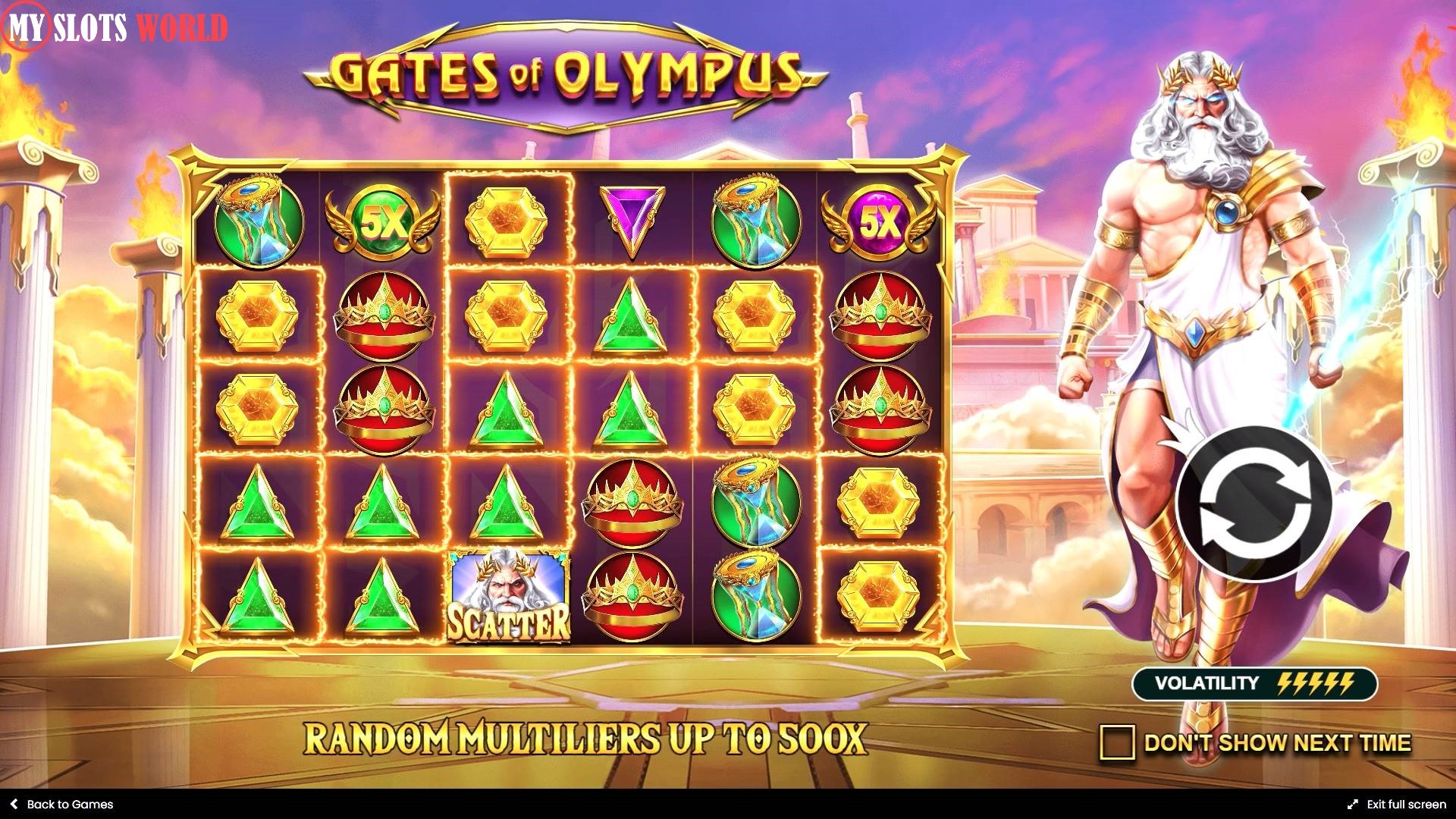
No paylines also means no wild symbol. Some players expect a wild to substitute for absent symbols, but Gates of Olympus has none. Its special symbols are the scatter and the multiplier orb, and they perform entirely distinct jobs. The scatter initiates free spins; multiplier orbs enhance the worth of victorious chains. This matters for beginners because numerous slot habits do not transfer. You can’t rely on a wild to finish a line—you must have eight same regular symbols. The paytable lists payouts for eight to nine, ten to eleven, and twelve or more identical symbols. I’d advise studying those thresholds thoroughly, because the jump in payout between twelve and, for example, fifteen matching crowns can be huge, turning a modest return into a significant factor of your stake. Understanding that scaling is crucial for deciphering the grid correctly during tumble sequences. As soon as you see how those tiers work, you’ll start to appreciate the significance of a screen full of crowns.
Wagering Options, Interface and How to Start Playing
Betting controls are straightforward because there are no per-payline modifications. You choose a total stake per spin, and that stake is used to compute all paytable payouts. On many licensed platforms, the usual range runs from €0.20 to €100 per spin, though the exact min and max can change by operator and currency. Beginners should start at the lowest comfortable level and watch how quickly the balance moves under high volatility. The main interface has a spin button, a stake selector, and access to the paytable and rules. I choose manual play because it offers you a more distinct sense of each tumble sequence. The key point: every payout displayed as a multiple is computed by your total stake, not by a smaller line bet. A 10x result at a €1 stake is €10; at €10 it’s €100. That simple relationship maintains the math easy. I’d also suggest using the autoplay function moderately when you’re first learning, because tumble chains take place fast and manual spins let you stop to see precisely which symbols helped to a win and how the multipliers were used. Manual play also aids you understand the rhythm of the tumbles.

Free Spins Feature: Triggering and the Persistent Multiplier
The free spins feature activates when 4 or more scatter symbols appear anywhere on the grid in a sole spin or tumble sequence. The standard award is 15 free spins, and 3 or more additional scatters during the feature award 5 more spins. Inside free spins, the persistent multiplier mentioned earlier applies to wins. That makes the feature qualitatively different from base play: a moderate win can become substantial if the accumulated multiplier is already elevated. Consider the free spins trigger as the primary structural aim of the game, but not something you can control. Because the trigger requires four scatters on a pay-anywhere grid, it can take place quickly or take https://student.cs.uwaterloo.ca/~cs132/Weekly/W05/A05/A05classdiagram.html a long time. High volatility suggests you ought not assume a feature is due. The only solid approach is to monitor your balance and recognize that free spins are a arbitrary bonus round, not a prize for patience. Some platforms provide a bonus buy option where permitted by local regulation, enabling you buy direct entry into free spins for a predetermined multiple of your stake, typically around 100 times. That’s a distinct decision with its own risk profile and is not available in all jurisdictions. So don’t chase it; let it happen.
Highest Win, Strategy Outlook and Final Verdict
The maximum win is 5,000 times your total stake. At a €1 stake, that’s €5,000; at €10, it’s €50,000. This cap is a helpful way to comprehend the game’s ceiling. The free spins feature with a high accumulated multiplier is the primary route to that maximum, but the cap applies regardless of how the game reaches it. I view Gates of Olympus as a high-variance, mechanically clear slot that benefits players who comprehend pay-anywhere wins and multiplier accumulation. It’s not appropriate for short sessions with a small bankroll if you anticipate steady returns. The right approach is to review the paytable, choose a stake you can endure through dry spells, and consider each spin as independent. For Greek players, the game’s appeal is most potent if you like volatile math wrapped in a familiar mythological setting. The absence of wild symbols and traditional paylines may seem disorienting at first, but the clarity of the rules means that once you absorb the eight-symbol threshold and the additive multiplier logic, the game becomes straightforward to follow. I consider it a well-constructed product that doesn’t mask its variance behind complexity, and that transparency is its strongest design feature. Your results will mirror the volatility, and no strategy can change that mathematical reality. That’s the bottom line.